

Meadow Planting
For open, sunny gardens — movement, texture and seasonal change
Our meadow planting works best in open, sunny gardens where light reaches much of the ground throughout the day. These conditions give us the opportunity to create generous, naturalistic landscapes filled with movement, texture and seasonal change.
Rather than treating a planting scheme as a collection of individual specimens, we create running rhythms through the garden. Grasses of different heights and textures are woven together with wildflowers, flowering perennials and ground-cover plants to create a meadow that feels loose, immersive and alive.
Working with the soil
Meadow planting is particularly well suited to poorer, lower-fertility and free-draining soils. Rather than automatically enriching the ground, we look closely at the existing conditions and work with them.
Crushed aggregates, gravel and other free-draining materials can provide the foundation for remarkably resilient plant communities. With the right plants, seemingly difficult ground can become an opportunity to create a beautiful, diverse and hardwearing garden.
Creating movement and structure
Ornamental grasses such as Calamagrostis brachytricha and Deschampsia cespitosa can create flowing rhythms and great sweeps of movement, with flowering plants emerging through them in changing layers throughout the seasons.
Small multi-stem trees such as birches, crab apples and Amelanchier can be introduced to anchor the meadow planting, giving the garden height, structure and year-round presence while allowing the planting beneath to remain loose and expressive.
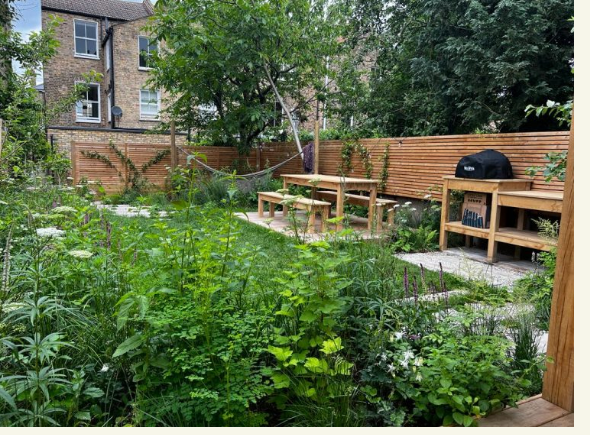
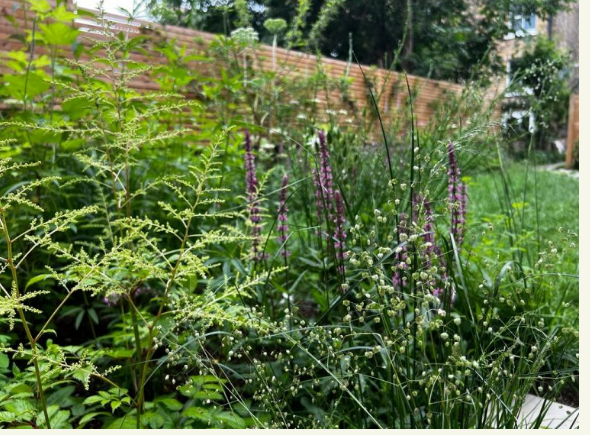
Meadow planting in London gardens
We have extensive experience designing and creating meadow-style planting within London gardens. It can be particularly effective in sunny, open spaces where a conventional lawn or traditional borders might otherwise dominate the garden.
Designed around the right plants and conditions, a meadow garden can be resilient, hardwearing and relatively low-maintenance, while giving an enormous amount back aesthetically. It is also a living landscape. Flowers provide nectar for pollinators, seed heads become food for birds, and the different layers of planting create shelter and habitat for insects and other wildlife.
The result is a garden that never feels static.
A cultivated wild of grasses, flowers, movement and life — changing with the light, weather and seasons.
WHAT COULD YOUR GARDEN BECOME?
Could your garden become a meadow?
Tell us about the light, soil and space in your garden and discover what might thrive there.