

UNCOVERING THE GARDEN
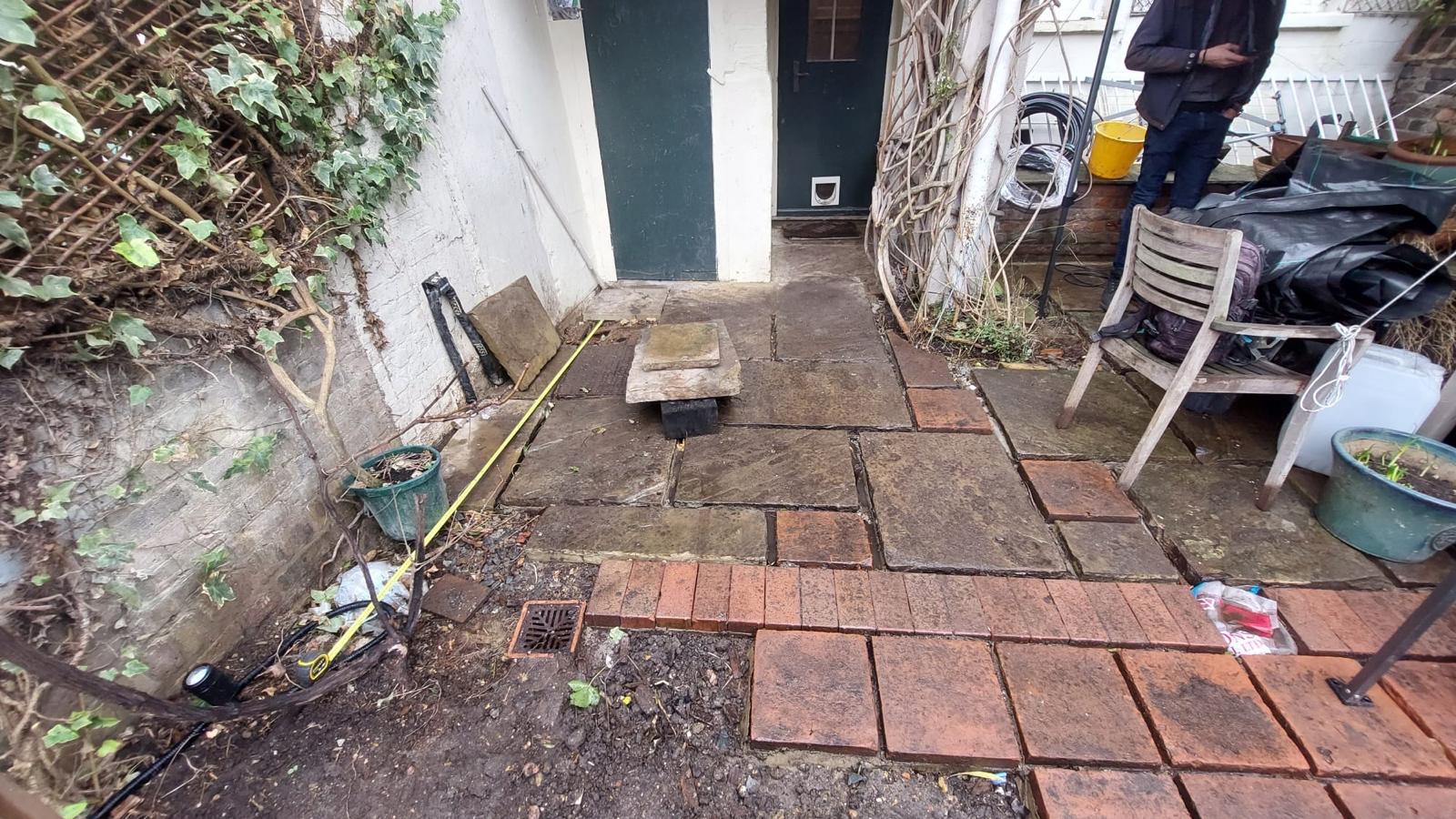
As we began clearing the site, the garden started revealing its own story.
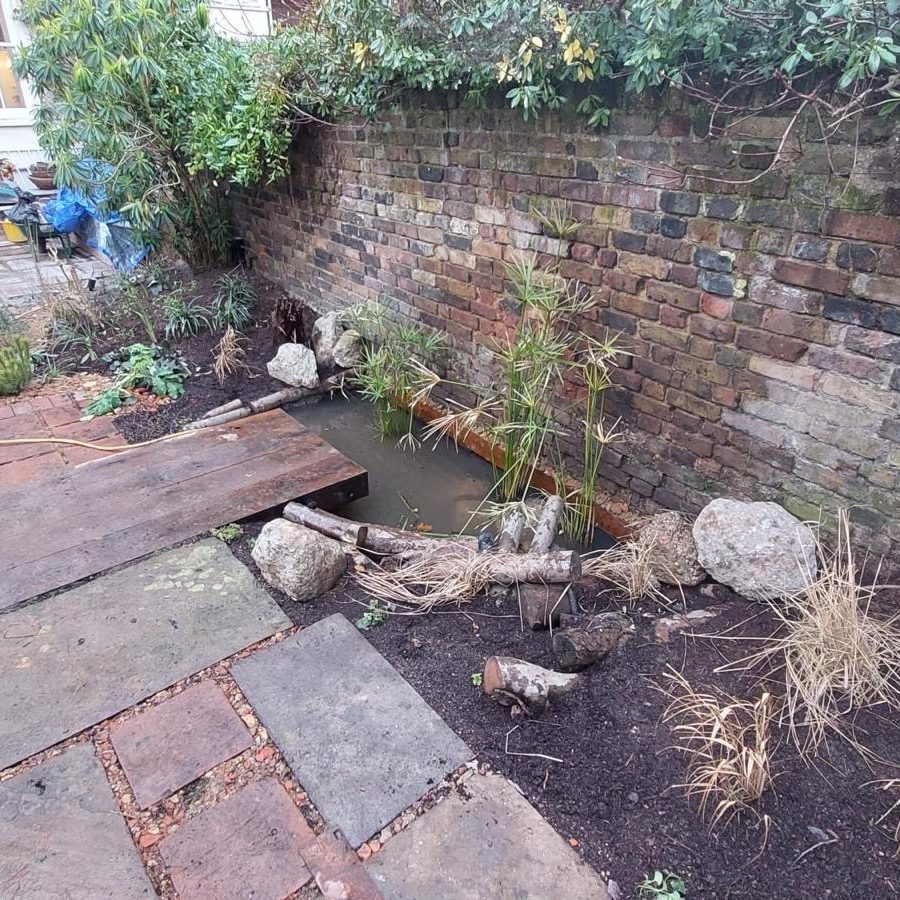
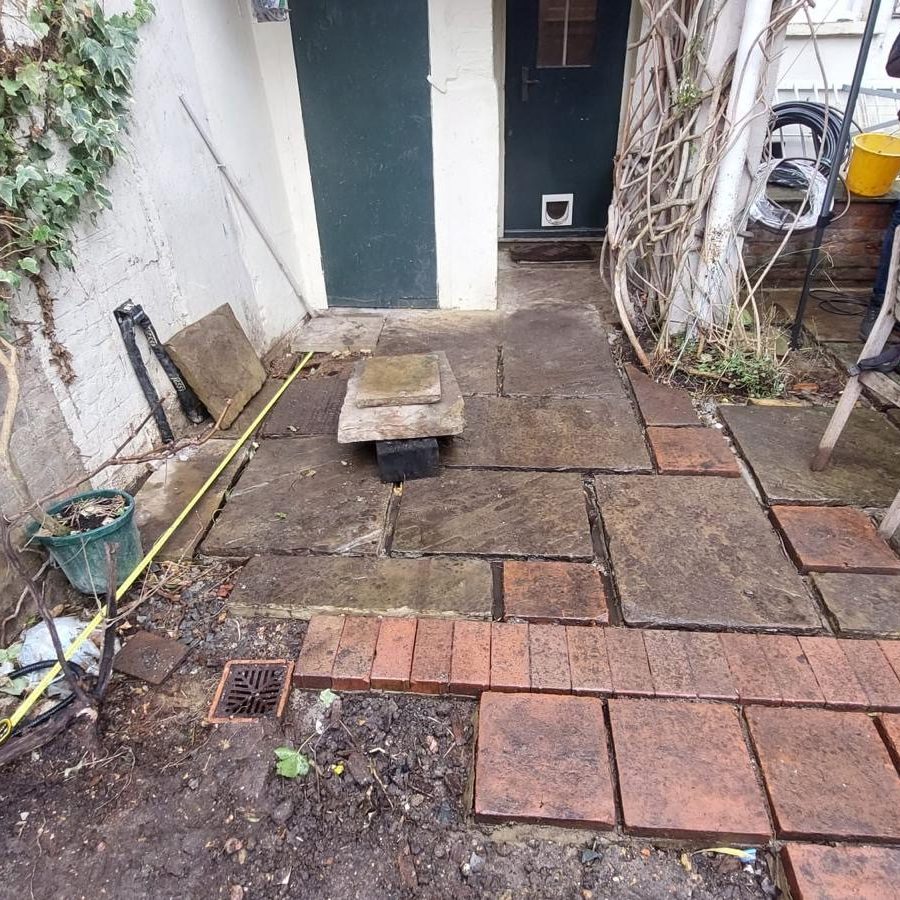
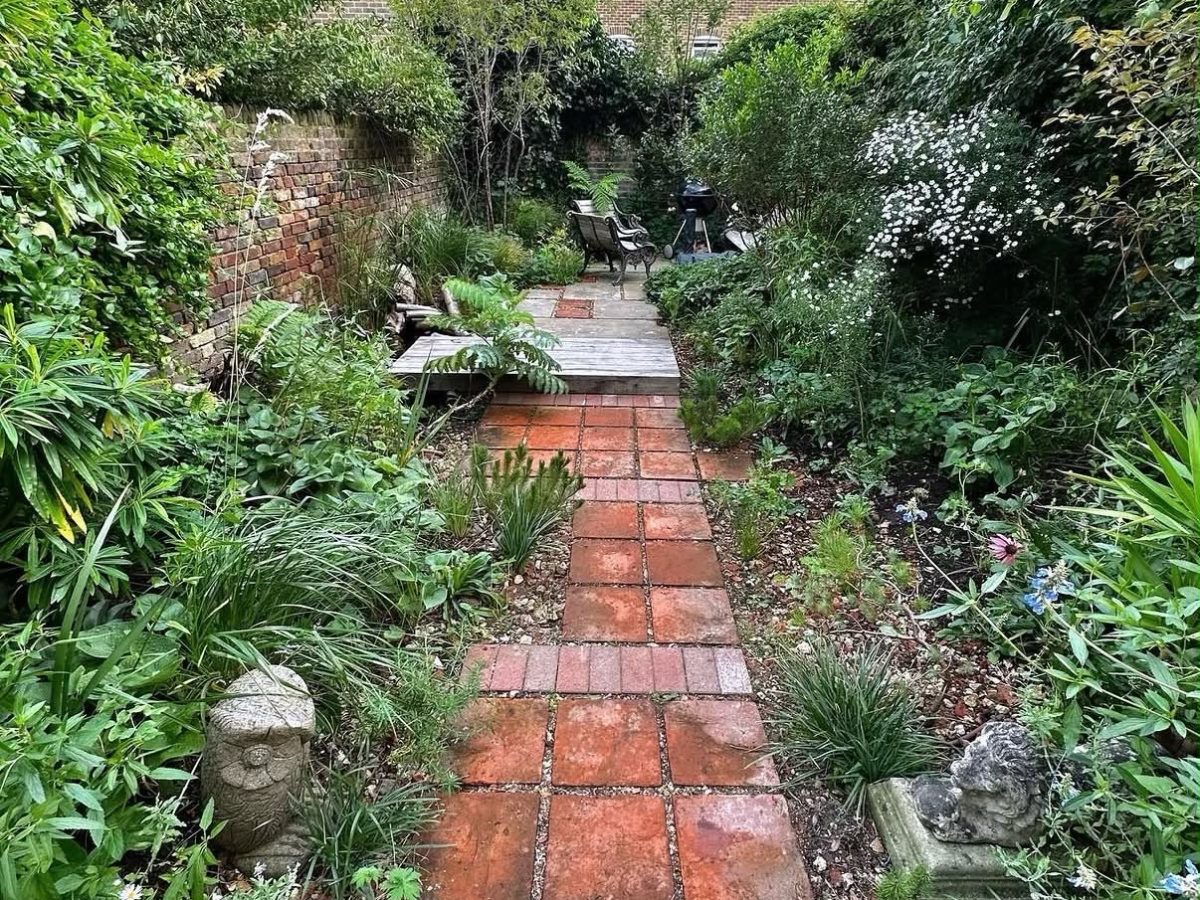
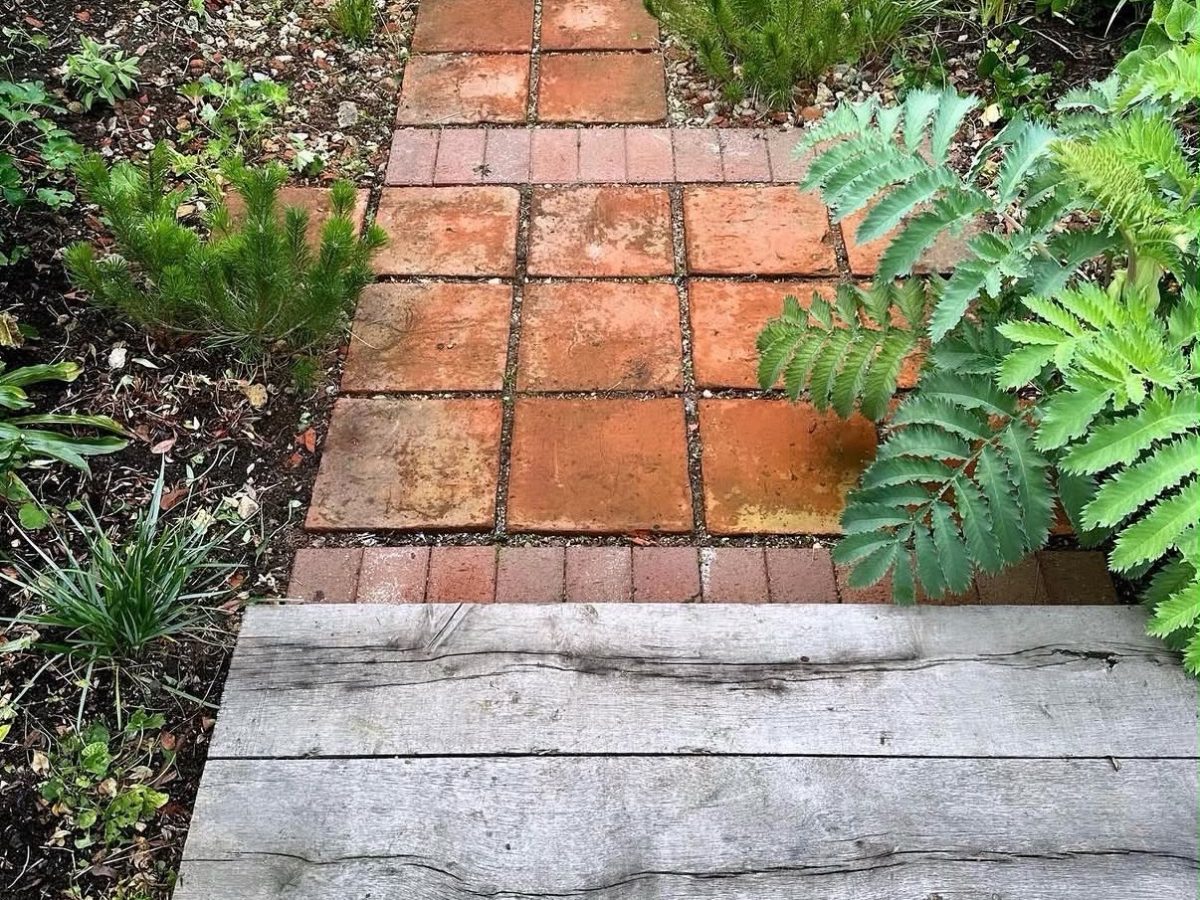
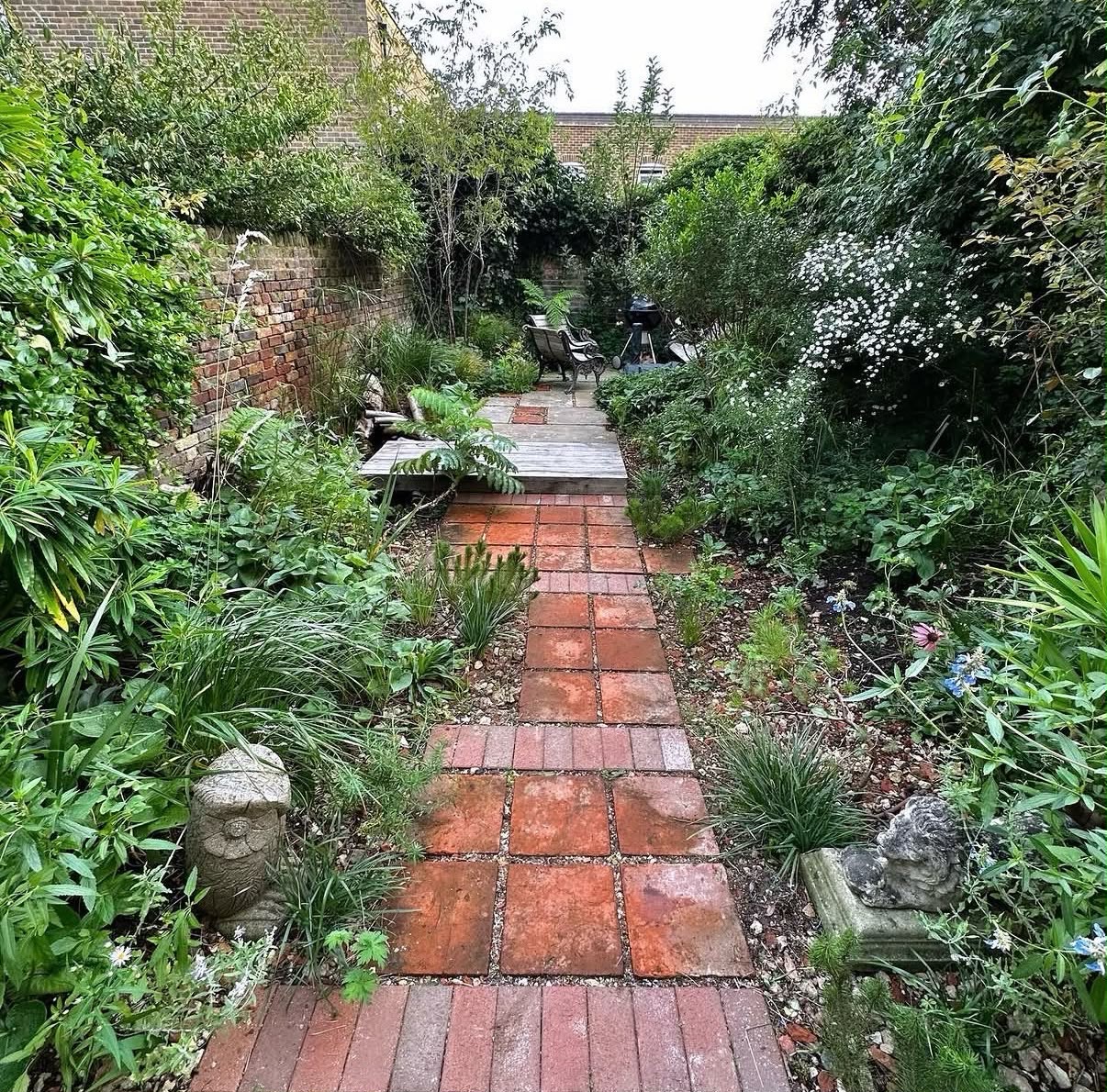
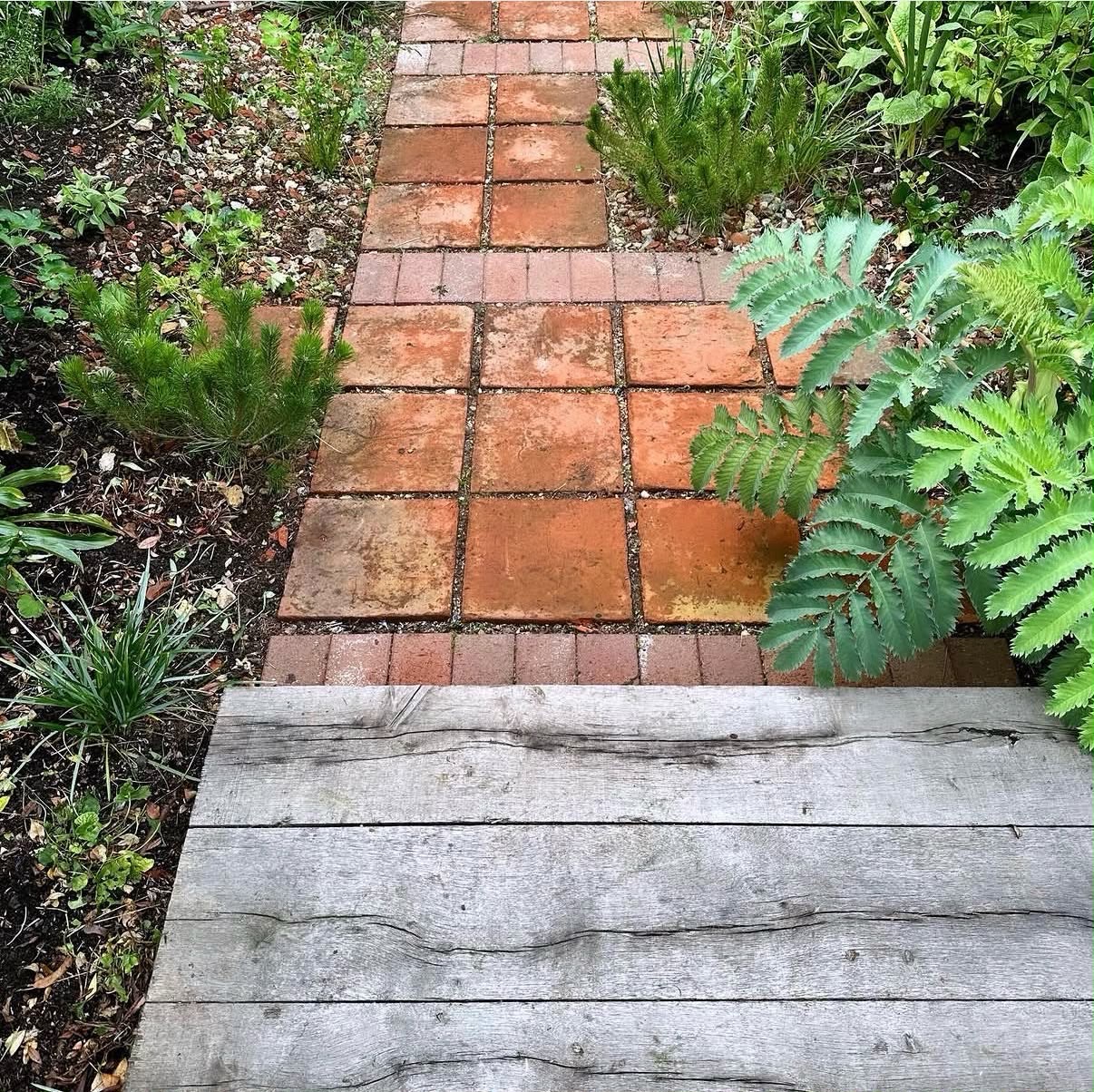
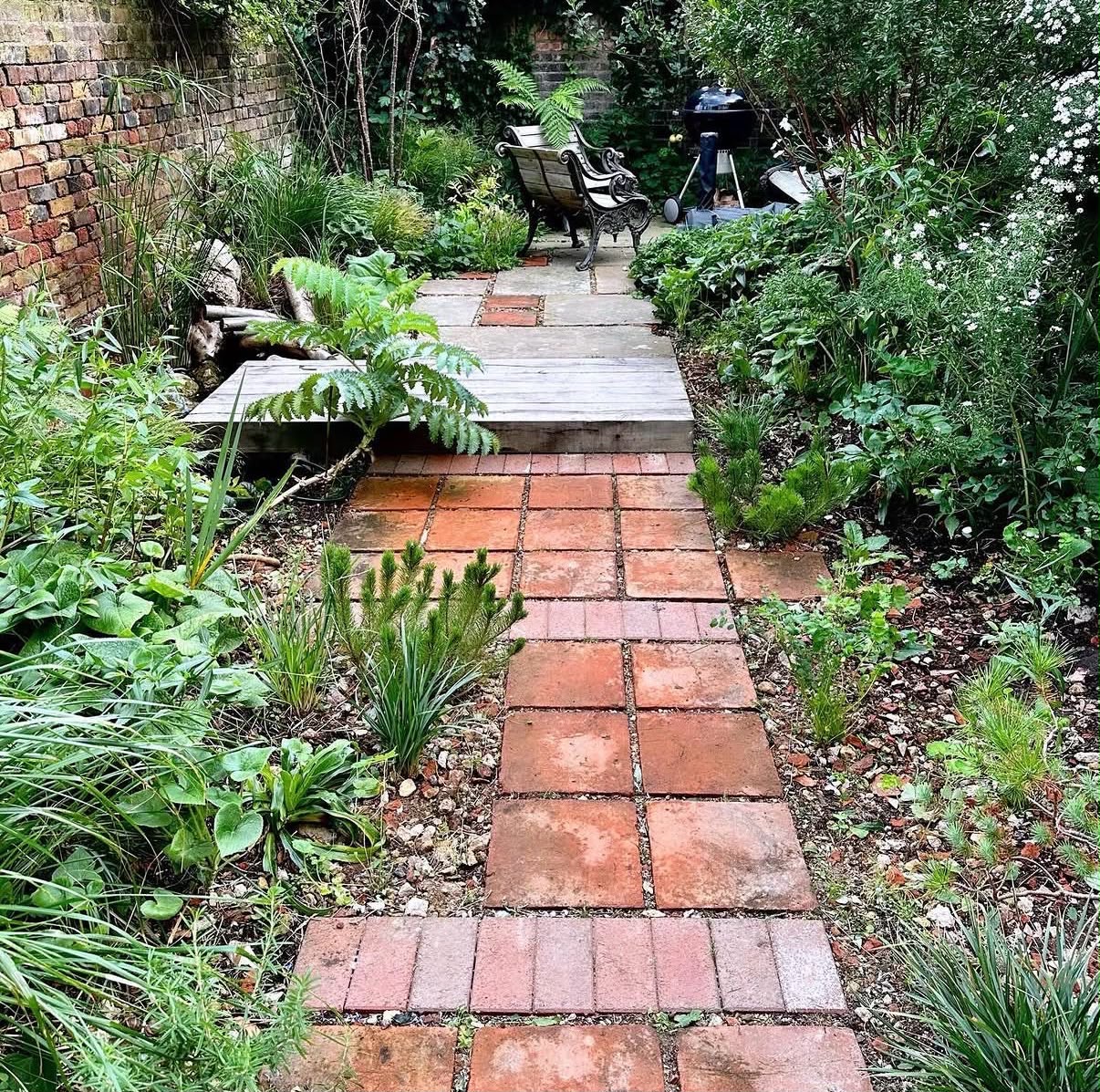
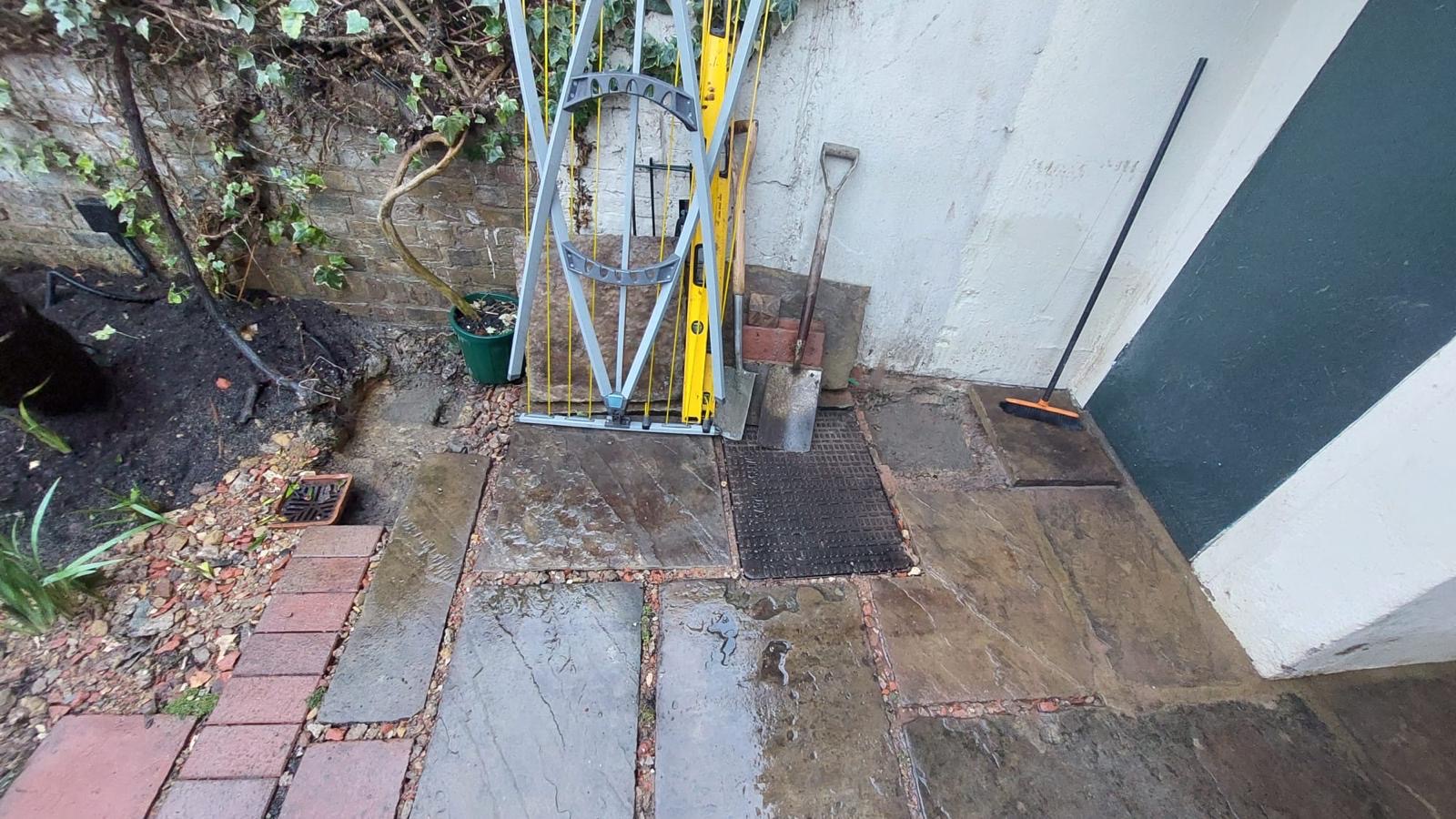
Hidden beneath years of growth were quantities of old York stone and original terracotta tiles. Rather than taking these away and replacing them with new materials, we carefully reclaimed them and made them part of the new garden.
The York stone and terracotta were reassembled into paths and terraces, sitting naturally alongside the original stock brick walls.
They weren’t materials we could have chosen from a catalogue. They belonged to this garden.
BUILDING WITH WHAT WE FOUND
The same approach continued during construction.
A considerable amount of old brick and concrete was uncovered as the garden was opened up. Instead of sending it away as waste, we brought in a mini crusher and processed it on site.
The resulting aggregate was then reused as a free-draining growing medium for naturalistic planting around the edges of the garden.
It meant less material leaving the site, less new material coming in, and something that could have been waste becoming useful again.
A GARDEN FOR EXPLORATION
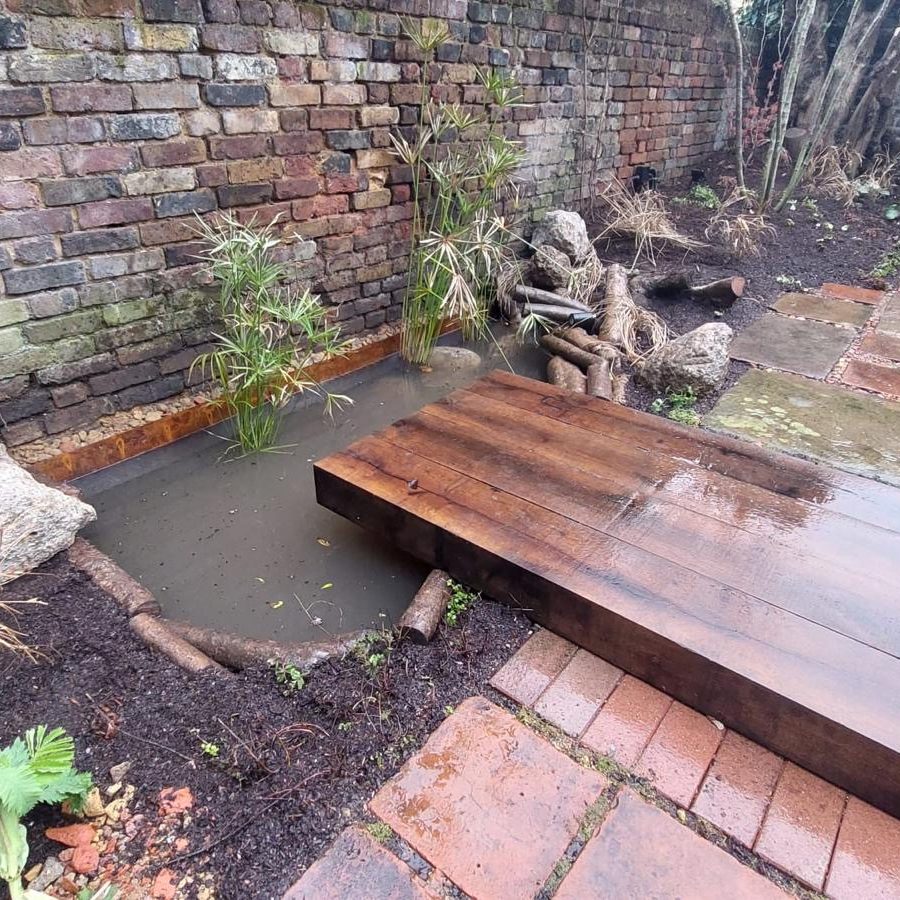
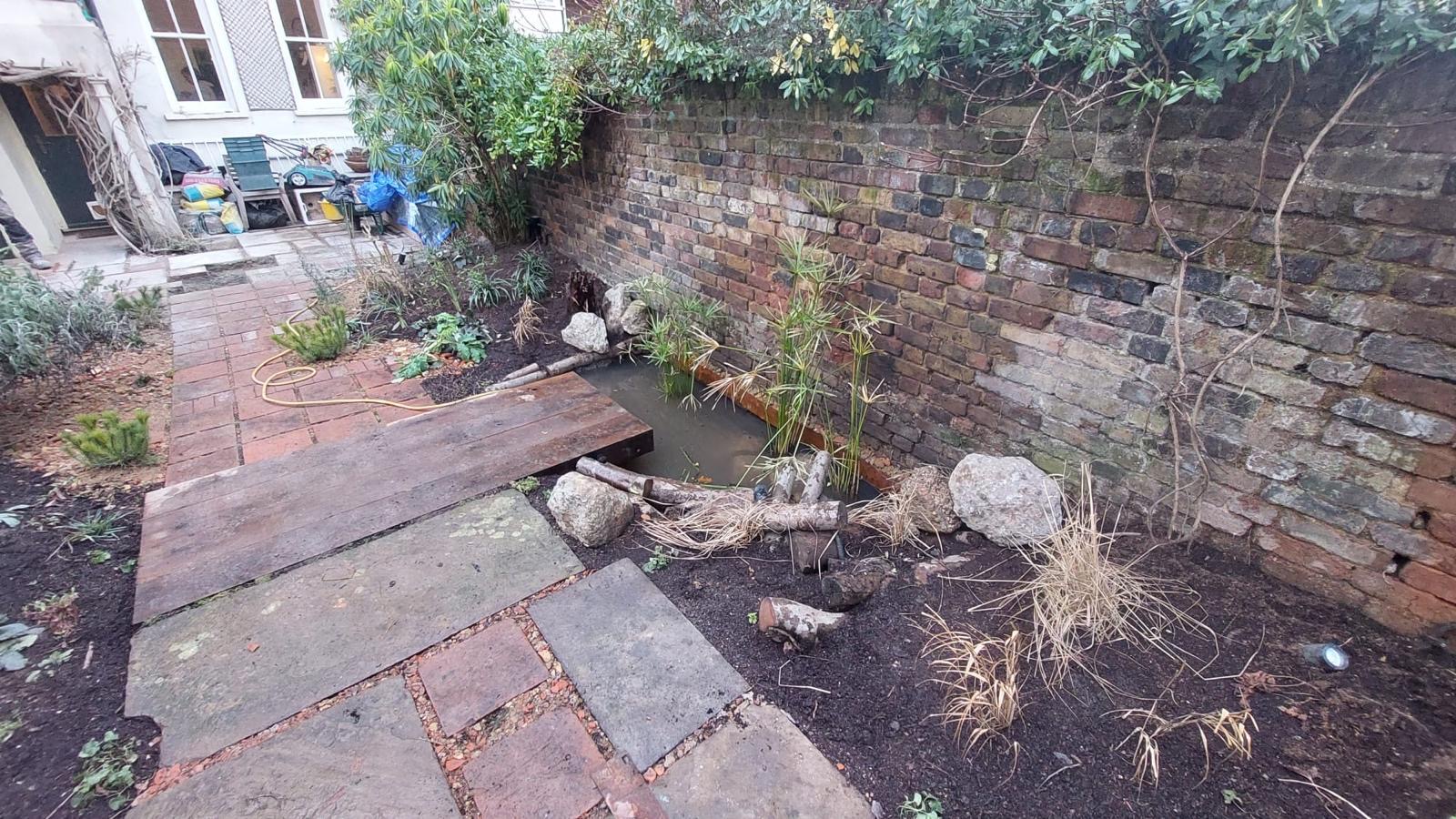
At the heart of the new garden is a wildlife pond.
An oak sleeper jetty reaches out towards the water, creating somewhere to sit as well as giving the children a place to get close to nature and go pond dipping.
Birds, insects and amphibians are now becoming part of the garden too.
It’s a simple feature, but one that has changed how the family can experience the space.
THE PLANTING
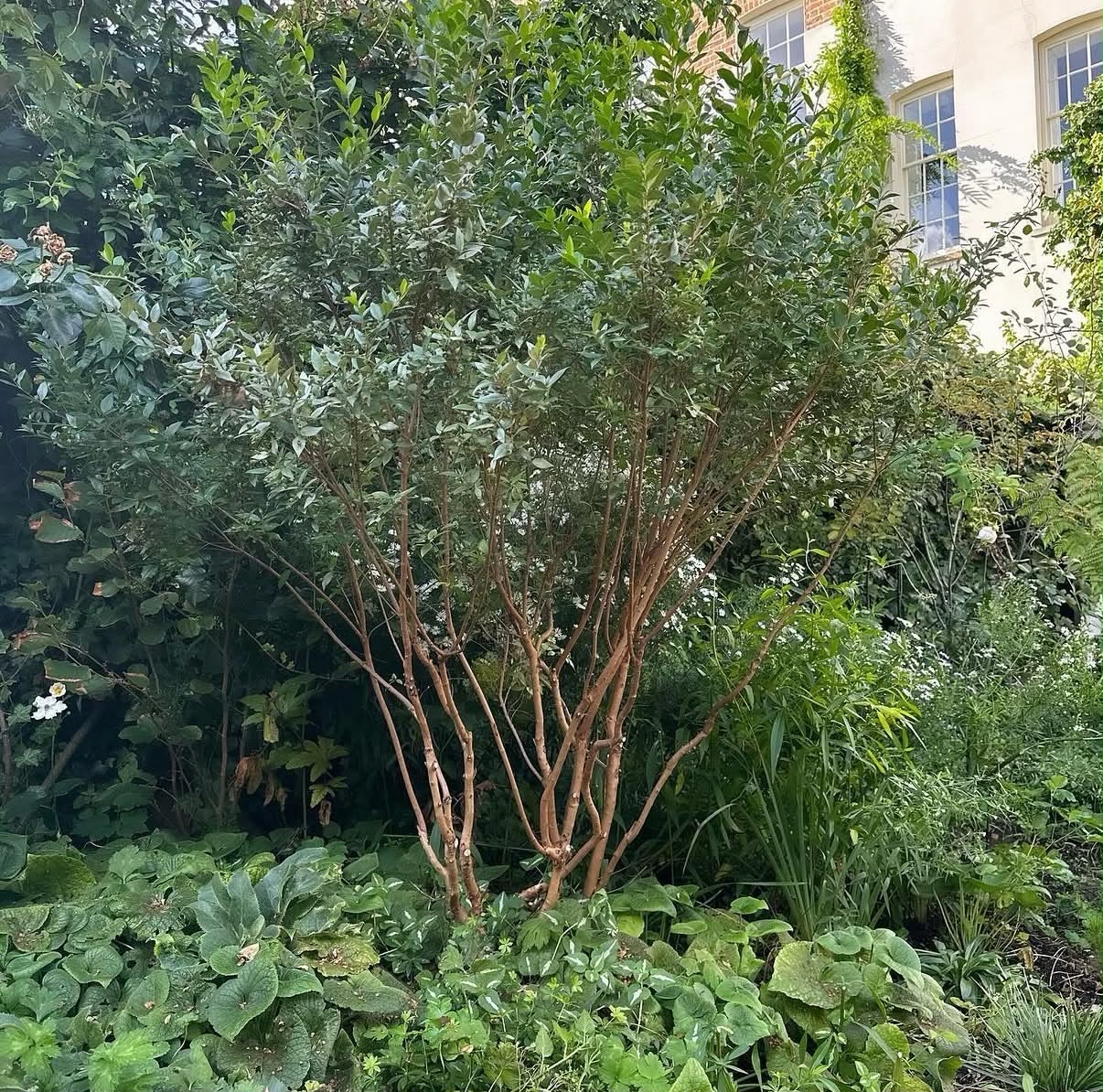
We wanted the planting to acknowledge the Victorian character of the house without creating a period garden.
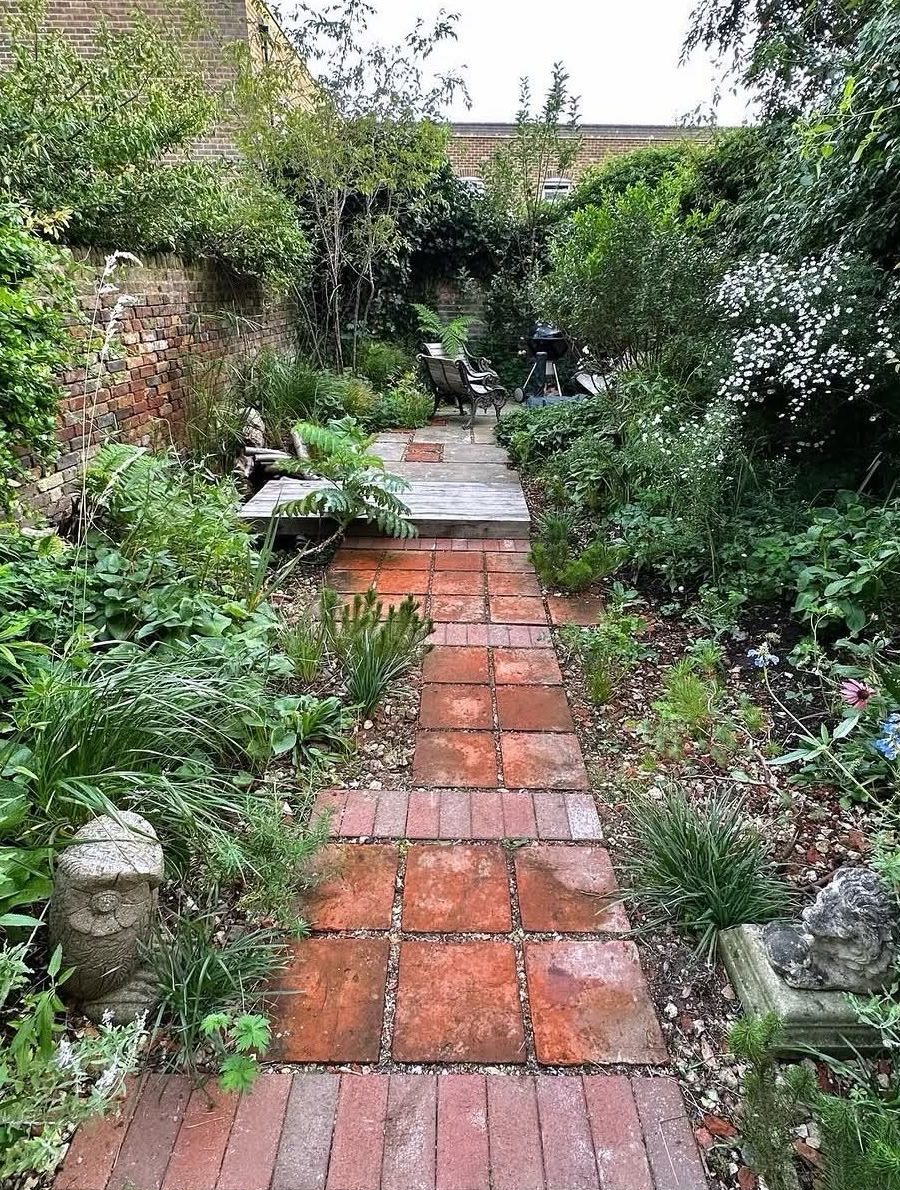
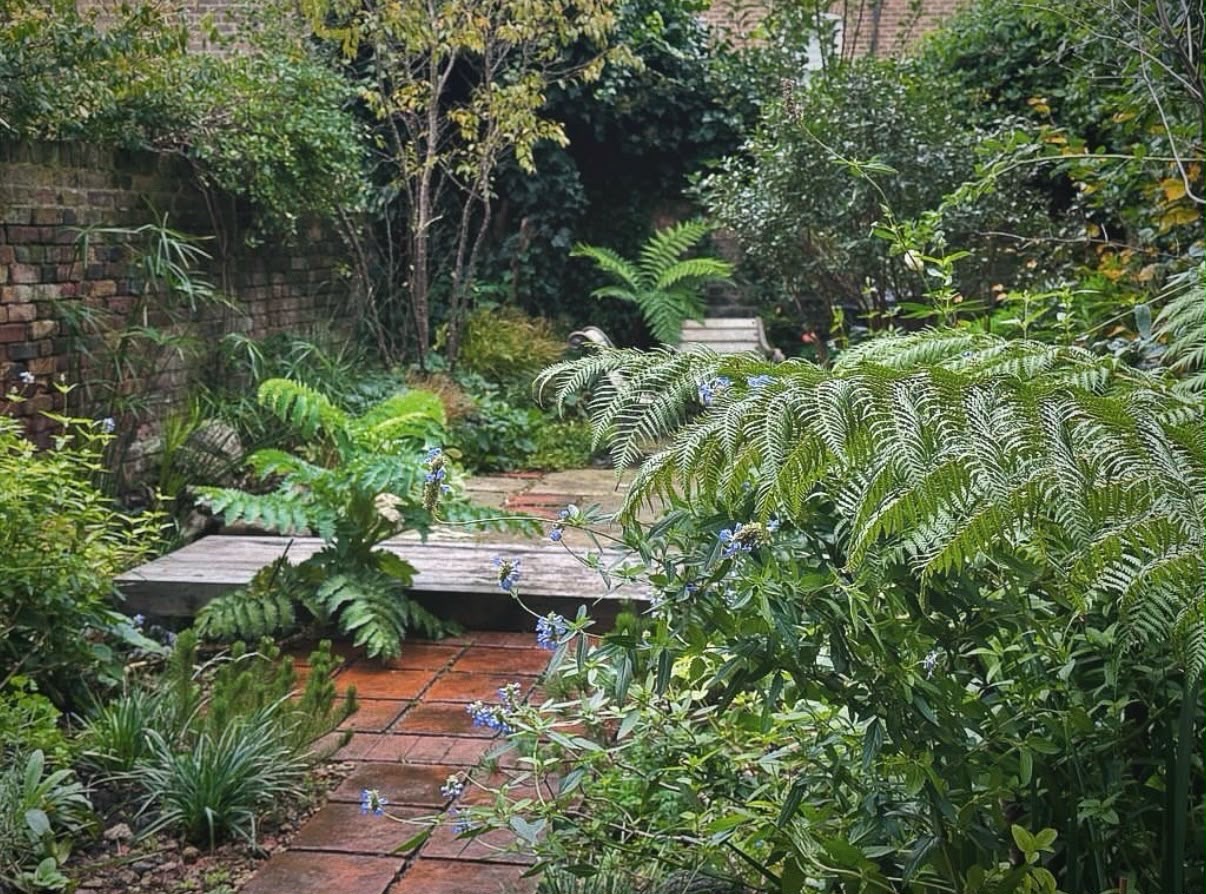
Architectural ferns, tree ferns and more unusual specimens give a nod to the Victorian fascination with collecting plants from around the world. Around them, looser perennial planting brings movement, softness and seasonal change.
As everything establishes, the contrast between the old brick walls, reclaimed materials and increasingly abundant planting will become stronger.
THE OUTCOME
What was once an almost inaccessible garden is now somewhere the family can properly live in and explore.
Perhaps the most satisfying part is how much of the finished garden was already there in some form. The old York stone has become pathways. Terracotta tiles have found a new life. Brick and concrete that could have become waste now support new planting. The original walls provide the backdrop to the whole garden. And at its heart, the pond has introduced a completely new layer of life.
We didn’t need to erase the garden’s past to give it a future. We just needed to uncover what was worth keeping and build from there.
GALLERY
Moments from the project.
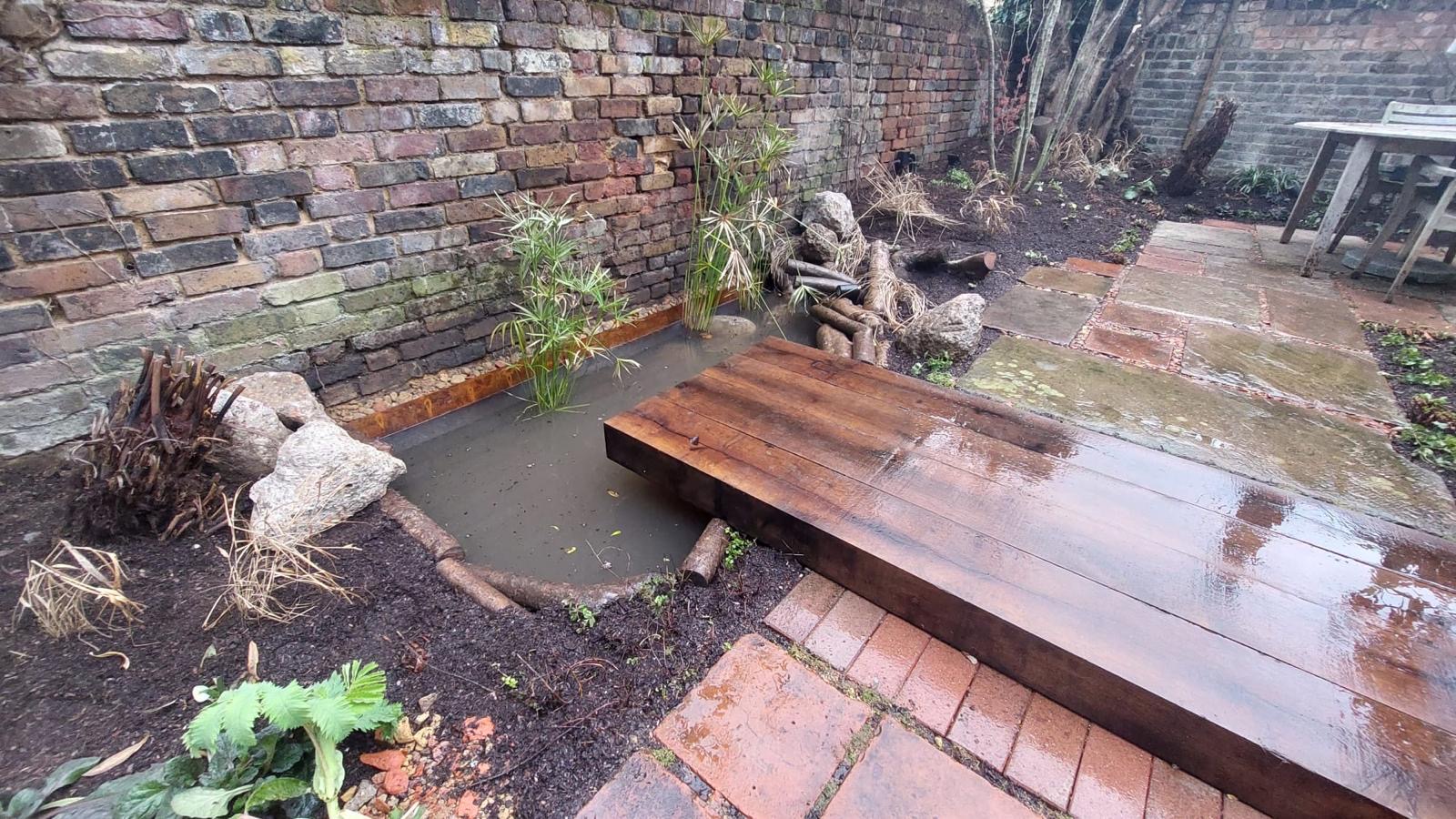
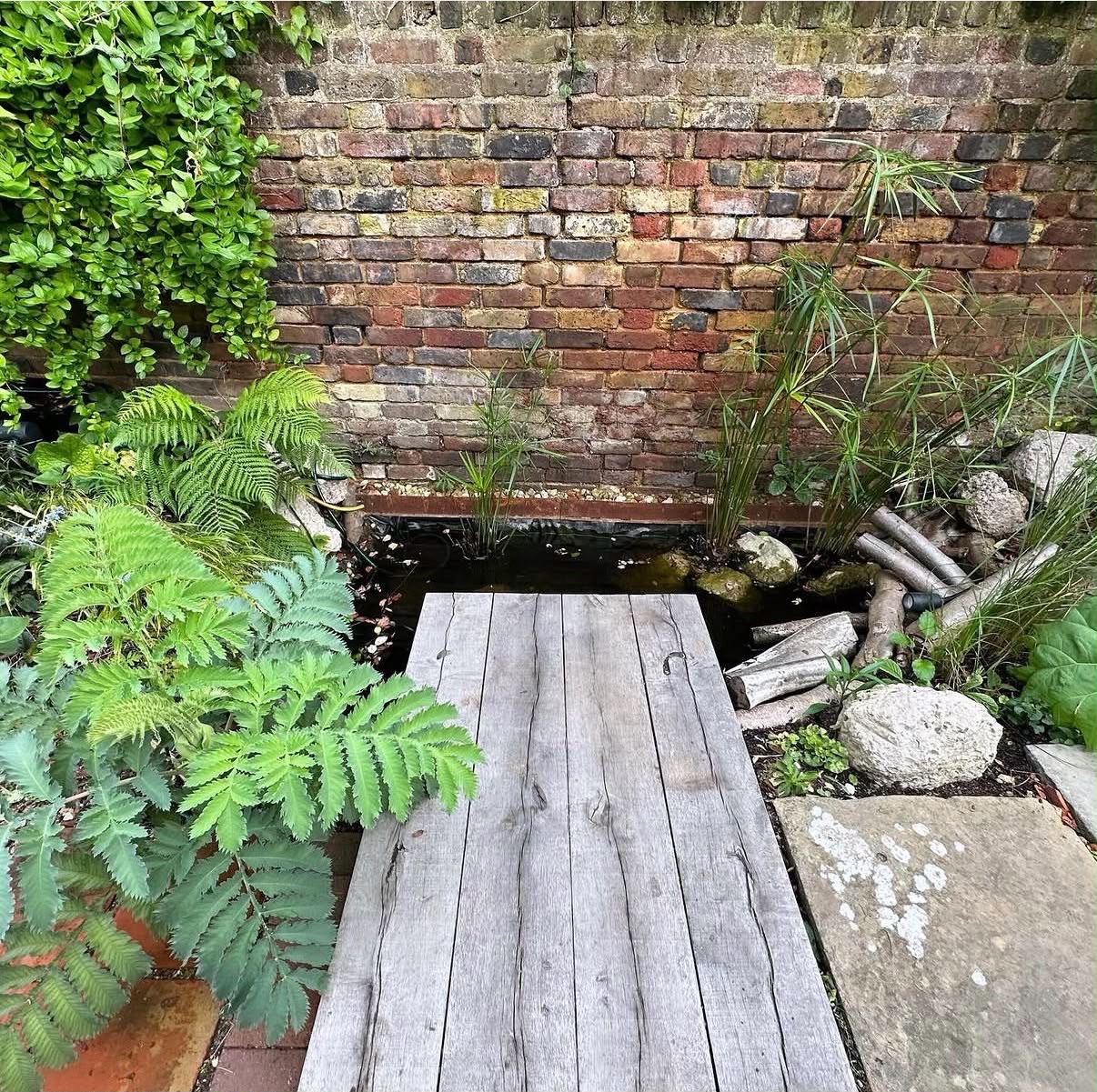
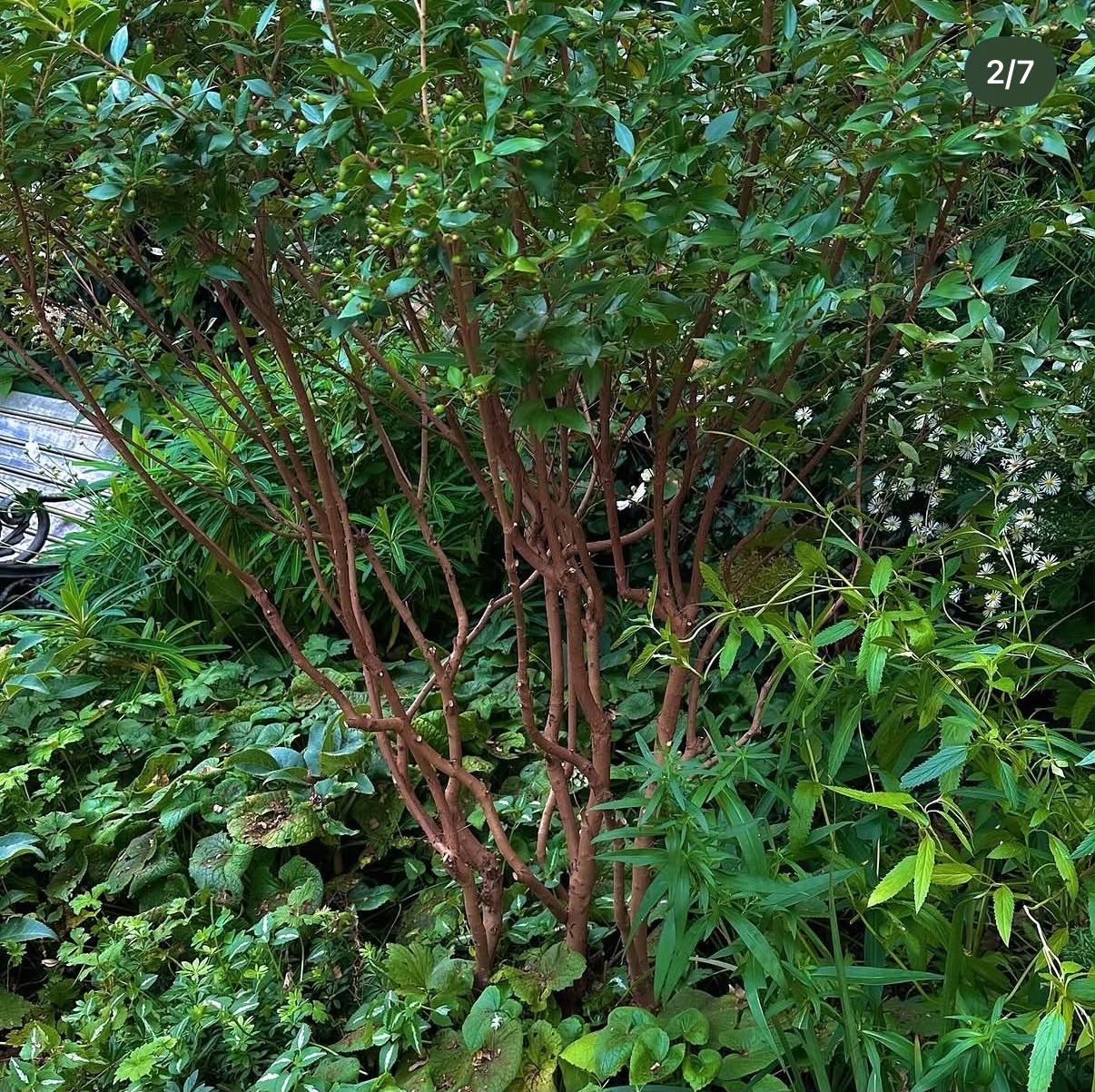
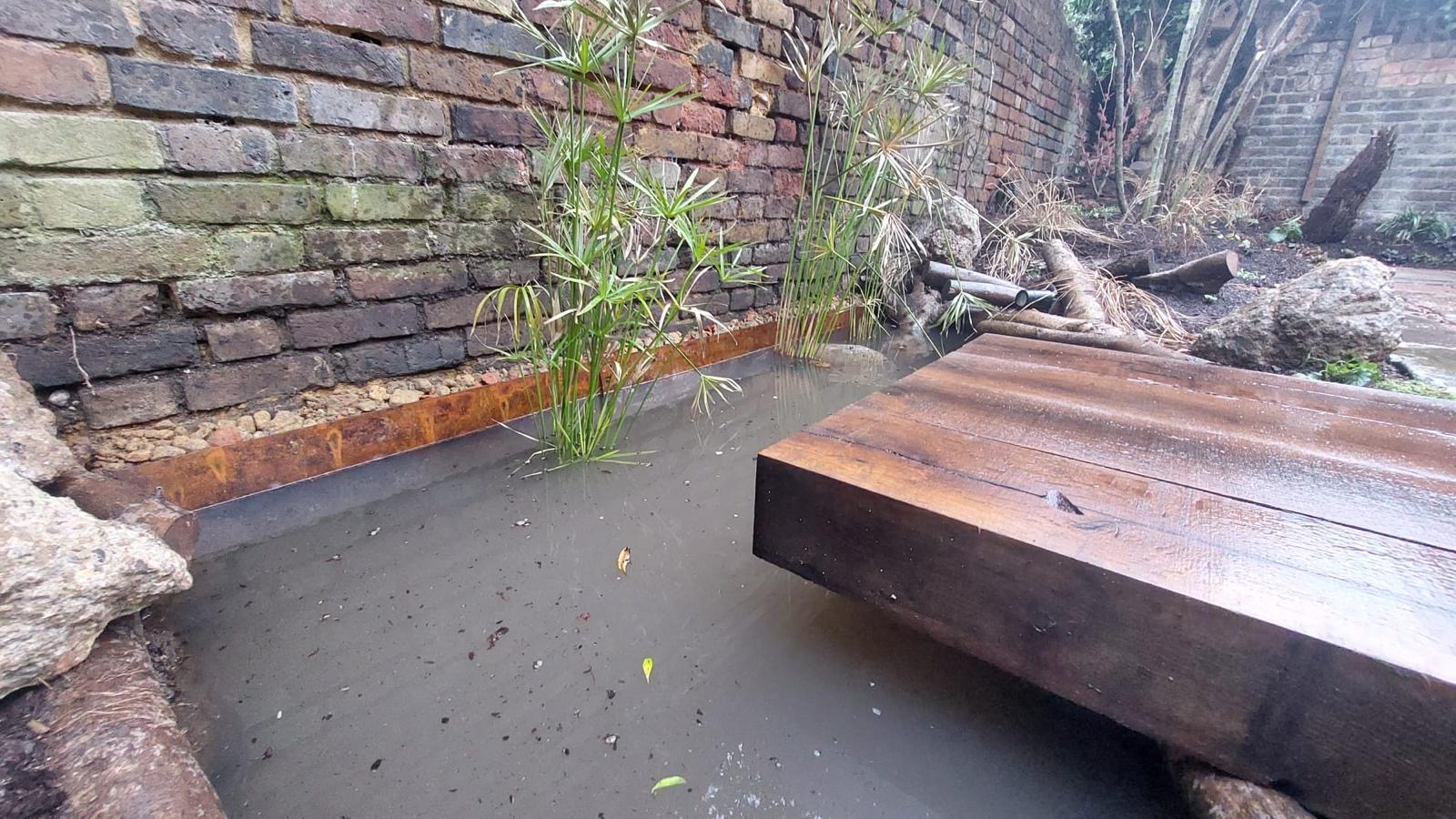
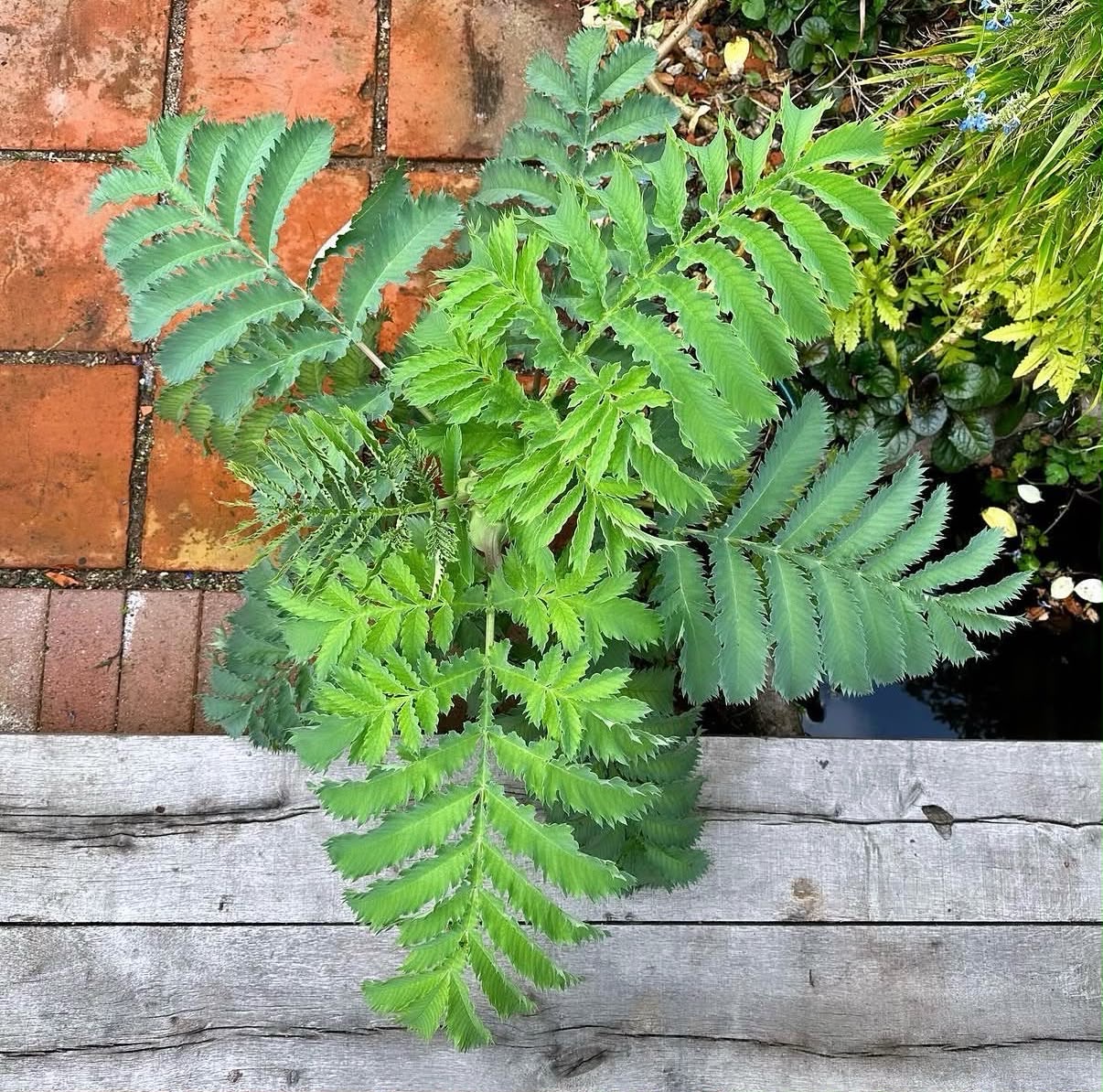
The pond has completely changed how we use the garden. The children love exploring it, and there’s always something new to discover.
START A PROJECT
Is there a garden waiting to be uncovered?
Tell us about your space — sometimes the most interesting gardens come from working with what’s already there.